
Venice photo spots range from the dawn-lit colonnades of Piazza San Marco to the empty Rialto stones at first light and the painted houses of Burano before the first tourist boat arrives. Most of them reward photographers who show up before 8 AM, and the best windows fall between October and April, when the light is softer, the crowds are thinner, and the famous acqua alta can turn the entire city into a living mirror. This guide draws on the working knowledge of Luca, Cecilia, Camilla, Raul, and Emil, the Localgrapher photographers who shoot these canals every week of the year, not a tourist checklist, but an honest insider map of where the light lands, when the crowds disappear, and what the guidebooks will never tell you about the best places for photos in Venice.
1. Piazza San Marco: The Sunrise Window No One Talks About
Piazza San Marco is the most photographed square in Venice, and most visitors arrive at 11 AM only to find a thousand other cameras already in frame. Cecilia and the rest of our Venice photography team work the square differently from the rest.
Be There by 5:45 AM, Leave by 7:30
Skip the daytime queues. Position yourself in front of the Doge’s Palace facing the basilica between 5:45 and 6:45 AM, roughly an hour before official sunrise in winter and about thirty minutes before in summer. The square is genuinely empty, the pigeons are still asleep, and the soft eastern light catches the gold mosaics above the basilica’s central door for about twenty minutes. By 8 AM, the first cruise groups arrive. The most underused angle is from under the colonnade of the Procuratie Nuove on the south side, looking diagonally across the square at the Campanile and the basilica together; the columns give you a natural frame and lift the shot above the standard postcard. Avoid weekends if you can. Tuesdays and Wednesdays are the quietest days. Entry to the piazza itself is free at any hour, although the basilica interior, Campanile, and Doge’s Palace each have separate tickets ranging from $13 to $35 (€11 to €30) if you want to add them later in the morning.

“San Marco at first light is the only time you get the square to yourself. I tell every client the same thing: be at the basilica at sunrise or do not bother coming. The light hits the gold above the central door for about twenty minutes, and that is the photograph everyone remembers.”
– Cecilia, Localgrapher photographer in Venice
2. Rialto Bridge: The Stone Arc From the Right Side
The Ponte di Rialto is one of the most photographed structures on the Grand Canal, and shot from the wrong side it looks like every postcard you have already seen. Luca shoots it from a position most visitors never find, and the result is one of the best places for photos in Venice when the evening light is right.
The Riva del Carbon Steps at Blue Hour
Cross to the southern side of the bridge and walk along the Riva del Carbon promenade for about 80 meters in the direction of Palazzo Loredan. There is a small set of stone steps that drop right to the water with an unobstructed three-quarter view of the bridge against the eastern sky. Arrive at 6:15 PM in winter or 8:30 PM in summer for the 20-minute blue hour window, when the bridge stones turn warm against the deep cobalt sky and the vaporetto lights start to streak the water. Avoid the main Rialto Market side; it is jammed with selfie sticks until well past 10 PM. The bridge is free to cross and walk on, and the railing along the Riva del Carbon promenade is wide and flat enough to rest a bag on without blocking pedestrians. For a couple shots, the small landing platform between the steps and the canal gives you a clean wet-stone foreground that reflects the bridge lights almost like a mirror.

3. Accademia Bridge: The Grand Canal in One Frame
The Ponte dell’Accademia is the southernmost of Venice’s four Grand Canal bridges and the only wooden one. It is one of the most rewarding Venice photo spots for a single classic frame, because it points your camera directly at Santa Maria della Salute with the canal sweeping below toward the lagoon.
Stand on the West Railing at 7 AM in Winter
Climb to the apex of the bridge and stand against the western railing facing northeast, lined up so the dome of Santa Maria della Salute fills the right third of your frame. Between 6:45 and 7:30 AM in December and January, the rising sun lights the church dome from the southeast and turns the canal water peach for about fifteen minutes. Camilla recommends arriving at least ten minutes early to claim your spot; the bridge is narrow and weekend tourists arrive in waves from 9 AM onward. The wooden treads are slippery in winter rain, so flat shoes only. The bridge is free to cross and structurally limited to pedestrians, so you will not be dodging delivery carts or vaporetti. If you want a wider context shot, drop down to the eastern bank at the foot of the bridge for a low-angle frame that includes the bridge structure itself with the dome behind.

4. San Giorgio Maggiore: The Bell Tower View Across the Basin
Across the basin from Piazza San Marco sits the island of San Giorgio Maggiore with its Palladio-designed church and a campanile that gives you the best aerial view of central Venice. This is one of the most underrated Instagram spots in Venice because almost every visitor stares at the church from the San Marco waterfront without realising that the view back from inside the campanile is the better photograph.
Take the 8 AM Vaporetto and Climb the Campanile
Catch the Linea 2 vaporetto from San Zaccaria at 8:05 or 8:15 AM (single ticket about $11/€9.50 in 2026); the ride across the basin takes about three minutes. Inside the church, the elevator to the top of the bell tower costs around $9/€8 per person, and the platform opens at 9 AM sharp. Be on the first elevator. The platform faces north toward Piazza San Marco, the Doge’s Palace, and the Salute dome, all in one continuous frame, with the Campanile of San Marco rising in the centre. By 11 AM, the platform is shoulder to shoulder. The morning light is also better; the southeast sun rakes across the basin and gives the rooftops dimensional shadow. Tighter, head-on framing of the basilica reads cleaner than sweeping panoramic shots from this distance. The church interior is also worth ten minutes; the Tintoretto altarpieces are softly lit from clerestory windows in the same morning light.

“From San Giorgio, you finally see Piazza San Marco the way it was designed to be seen, with a little distance and the whole basin in front of it. I bring clients here when they want one photograph that says Venice and nothing else has to. Most tourists never cross the water, and that is exactly why it works.”
– Camilla, Localgrapher photographer in Venice
5. Burano: The Painted Island Before the First Boat
Burano is the lace-making island in the northern lagoon, famous for rows of houses painted in saturated reds, blues, greens, and yellows. Day trippers arrive on the 10 AM vaporetto. Emil takes the 6:50 AM boat instead, and that one decision is what separates a serious Burano photograph from a snapshot.
The 6:50 AM Boat from Fondamenta Nove
Take the Linea 12 vaporetto from Fondamenta Nove at 6:50 AM; the ride is around 45 minutes. You will arrive on Burano just as the fishermen are sorting their catch and the shopkeepers are pulling up shutters, with about ninety minutes of empty streets before the first tourist boat lands. The strongest single frame is from the small bridge over the Rio Pontinello canal looking west toward Via Baldassarre Galuppi; you get pastel houses reflected in still water with the leaning campanile of San Martino in the background. Around the back of the church, the green and pink houses along Fondamenta del Pizzo make excellent portrait backgrounds because the walls are warm-painted and shadowless before 9 AM. The morning calm before 9 AM gives you near-perfect reflections in the canal water. Round-trip vaporetto access is included in any daily pass ($30/€25), and the vaporetto stop is a two-minute walk from the photogenic centre.

6. Punta della Dogana: Where Santa Maria della Salute Meets the Lagoon
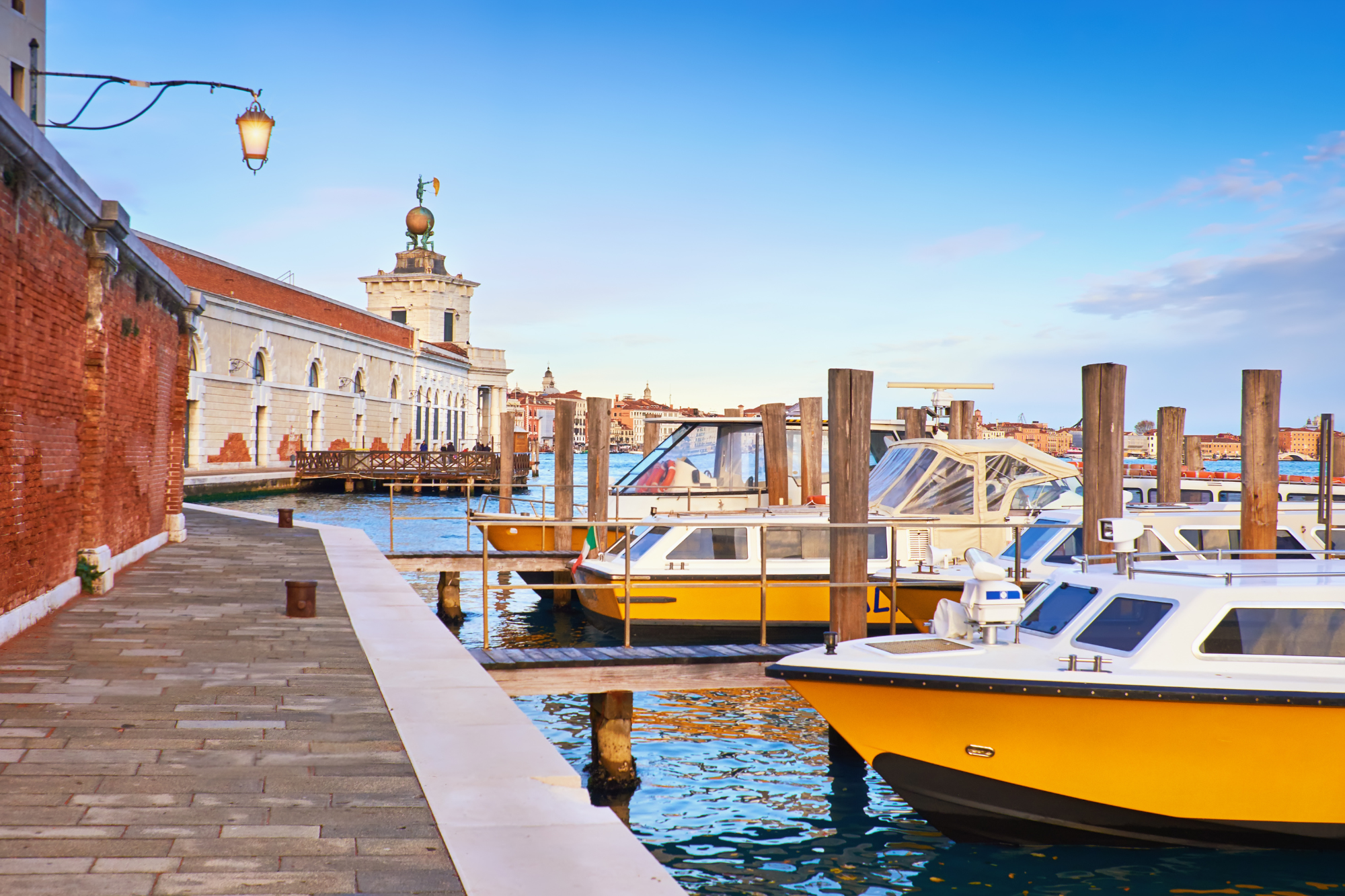
The Punta della Dogana is the triangular tip of the Dorsoduro peninsula where the Grand Canal meets the Giudecca Canal and opens out into the lagoon. Raul calls it the best free vantage point in central Venice, and the symmetry of the Santa Maria della Salute basilica beside it makes it one of the most photogenic locations in the entire city.
The Promenade at the Customs House at Sunset
Walk to the Punta della Dogana customs house at the very tip of Dorsoduro and follow the stone promenade around to the eastern side. Stand with your back to the Salute, and you have Piazza San Marco, the Doge’s Palace, and the Campanile across the water on the right, and the open lagoon and San Giorgio Maggiore on the left, in a 180-degree sweep. The window between 6:00 and 6:30 PM in winter (or 8:15 and 8:45 PM in summer) gives you the Salute’s white marble dome glowing pink from the western sun while the basin turns a deep cobalt blue. The promenade benches are wide and flat, useful as a steady rest on the final evening shots. Entry to the promenade is free; the Pinault Collection inside the customs house is a separate ticket ($20/€18), and the museum closes at 7 PM, so do the photography first and the art second.
7. Cannaregio Backstreets: Real Venice Without the Crowds
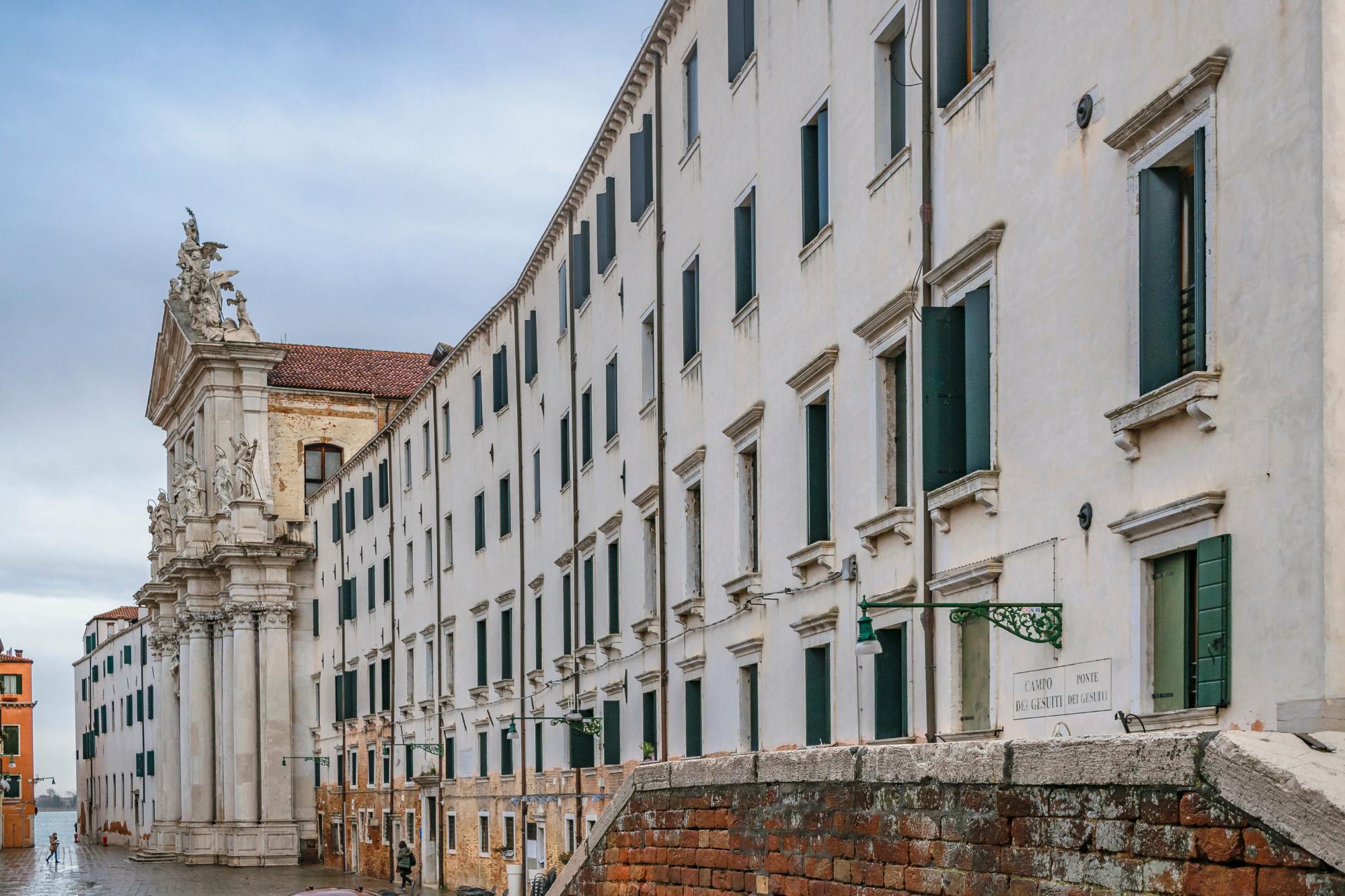
Cannaregio is the working-class northern district of Venice and the place locals send you when they want you to see the real city. It is one of the most rewarding Venice photo spots because there is no signature landmark; the photograph is the neighbourhood itself, the laundry lines, the half-shadowed canals, and the empty footbridges.
Fondamenta della Misericordia Between 4 and 6 PM
Start at the Ponte Chiodo, one of the only bridges left in Venice without a parapet, and walk south along the Fondamenta della Misericordia toward Ponte dei Tre Archi. The light between 4 and 6 PM in the cooler months rakes down the narrow alleys from the southwest and turns the brick walls warm umber for about an hour. There is almost no foot traffic through here. Local kids play football along the wider stretches near Campo dell’Abbazia, which gives you a candid Venice that nothing else in this guide can match. Get a coffee at a corner bacaro along the way; the waterside tables are perfect for portrait setups. The whole walk is free, there is no entry fee for any of the bridges or fondamentas, and the area is well-lit enough to keep shooting until 7 PM in winter and well past 9 PM in summer.
“My favourite places in Venice are the ones without any crowd around. Cannaregio in the late afternoon is where I bring couples who want a real photograph and not a postcard. You walk for an hour, and you barely see another tourist, just locals coming home and the light bouncing off the canals.”
– Luca, Localgrapher photographer in Venice
8. Fondaco dei Tedeschi Rooftop: Free Aerial Views of the Grand Canal
The T Fondaco dei Tedeschi is a luxury department store inside a restored Renaissance palace on the north end of the Rialto Bridge. The reason it belongs on this list is the rooftop terrace, which gives you the best free aerial view of the Grand Canal in the entire city and routinely ranks at the top of any list of Instagram spots in Venice.
Book the 15-Minute Slot Online a Week Ahead
Access to the rooftop is free, but you must reserve a 15-minute slot online at the Fondaco’s website at least 5 to 7 days in advance during peak season. Choose the 4:30 PM slot in winter or the 7:15 PM slot in summer for the golden-hour window over the Grand Canal. The terrace points southwest, directly down the canal with the Rialto Bridge in the right of the frame and the dome of Santa Maria della Salute on the horizon. The 15-minute timer is enforced, so set your composition before climbing the final escalator to the roof. The store itself is also worth a slow walk on the way down; the inner courtyard has been preserved as a Renaissance atrium, and the marble staircase frames a couple beautifully without anybody looking up. Bags larger than a small backpack must be left at the cloakroom on the ground floor before going up.

9. Libreria Acqua Alta: The Bookstore Half-Drowned in Canal Water
The Libreria Acqua Alta in Castello is a small independent bookshop whose owner stores his books in bathtubs, rowboats, and a full-sized gondola to protect them from the regular winter flooding. It is one of the most photographed indoor locations in Venice and a stop our photographers know to visit before the lunch rush.
Walk In at 9:30 AM, Not 11
The bookshop opens at 9:00 AM. Arrive at 9:30, and you will have the main back room with the gondola full of books almost entirely to yourself for about thirty minutes. By 11:00 AM, the queue runs out the door and into Calle Lunga Santa Maria Formosa. The strongest single shot is the back outdoor staircase built entirely from old encyclopedias; it opens onto a small canal and frames the water behind. Entry is free; the owner asks you to buy a book or a postcard if you photograph, and most postcards are around $3/€2.50. Be respectful, no flash, and step aside for paying customers. The shop’s address is Calle Lunga Santa Maria Formosa 5176/B, a four-minute walk east from Piazza San Marco, and it is closed on Sunday afternoons, so plan accordingly.

10. Zattere Promenade: Dorsoduro’s Open Light on Giudecca
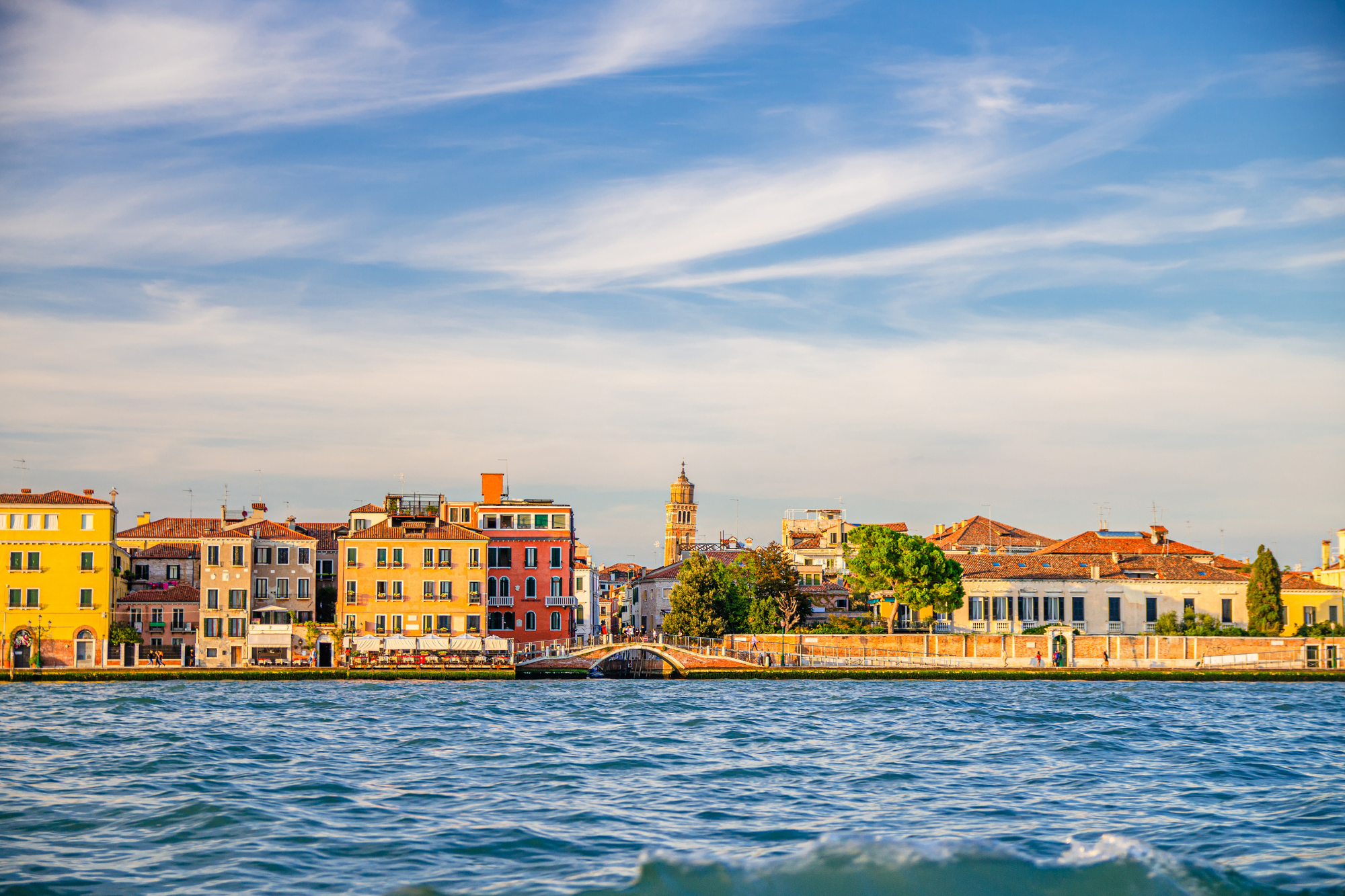
The Zattere is the long stone promenade along the southern edge of the Dorsoduro district facing across the Giudecca Canal. It is one of the few stretches of Venice with open sky, broad pavement, and unfiltered western light, which is exactly why our photographers reach for it when a couple wants movement and air in their portraits.
Walk the Stretch Between Salute and San Basilio at Sunset
Start near the Santa Maria della Salute end of the Zattere and walk southwest along the promenade toward the San Basilio vaporetto stop. The 600-meter stretch runs almost exactly east to west, so the late-afternoon sun comes directly along your path for the last hour of daylight. The far side of the canal (Giudecca) has the Redentore church and the long brick frontage of the Molino Stucky, both lit warm and gold from the front during this window. The promenade is wide enough for couples to walk hand in hand at any pace without bumping into other photographers. Get a Spritz Aperol at one of the small terrace bars along the way; Venetians have done this since the 1920s, and a glass goes for around $7/€6. If you happen to be here on the third weekend of July, the Festa del Redentore fireworks (July 18 to 19 in 2026) explode directly over this stretch of water, and the promenade fills with locals on white tablecloths.
Best Time of Day for Photos in Venice
Getting the timing right matters more at Venice photo spots than almost anywhere else in Europe, because the city’s narrow streets channel the light unevenly and many of the best frames have a window of only twenty to thirty minutes a day.
Sunrise, Blue Hour, and Seasonal Notes
Golden hour (morning): Sunrise in Venice runs from around 7:35 AM in December and January to 5:35 AM in mid-June. The post-sunrise golden hour window lasts about 45 minutes. This is the strongest window for Piazza San Marco, the Accademia Bridge, Burano, and the Cannaregio backstreets.
Golden hour (evening): Sunset falls between 4:30 PM in mid-December and 9:00 PM in late June. Blue hour follows for another 20 to 25 minutes. The Rialto Bridge, Punta della Dogana, Fondaco rooftop, and Zattere promenade are at their best in this window.
Worst light window: 11 AM to 2 PM year-round. The overhead light flattens the canal-side facades, the basin reflects glare, and tourist crowds peak across every central spot.
- Late autumn and winter (Oct to Feb): lowest tourist volume, frequent morning fog over the lagoon, and possible acqua alta turning the squares into reflective mirrors. The most atmospheric window for Venice photography.
- Spring (Mar to May): soft, balanced light, blossoming wisteria in the smaller campos, and manageable visitor numbers. April is the single best month for first-time photographers.
- Summer (Jun to Aug): brutal midday heat, dense crowds, and washed-out colour in the noon hours. Sunrise and evenings after 7 PM are your only viable windows.
- Carnival (Feb 7 to 17, 2026): masked figures in San Marco at 7:30 AM produce the most iconic Carnival portraits, before the daytime photographer queues arrive.
The hidden advantage of November through early March is the soft overcast light combined with frequent acqua alta, which turns the city into a reflected double of itself for a few hours at a time. Many of our photographers consider these months the most rewarding for serious portrait work. For the full picture on what to wear, the best monthly windows, and how to plan a session, our Venice photoshoot guide covers everything before you book.
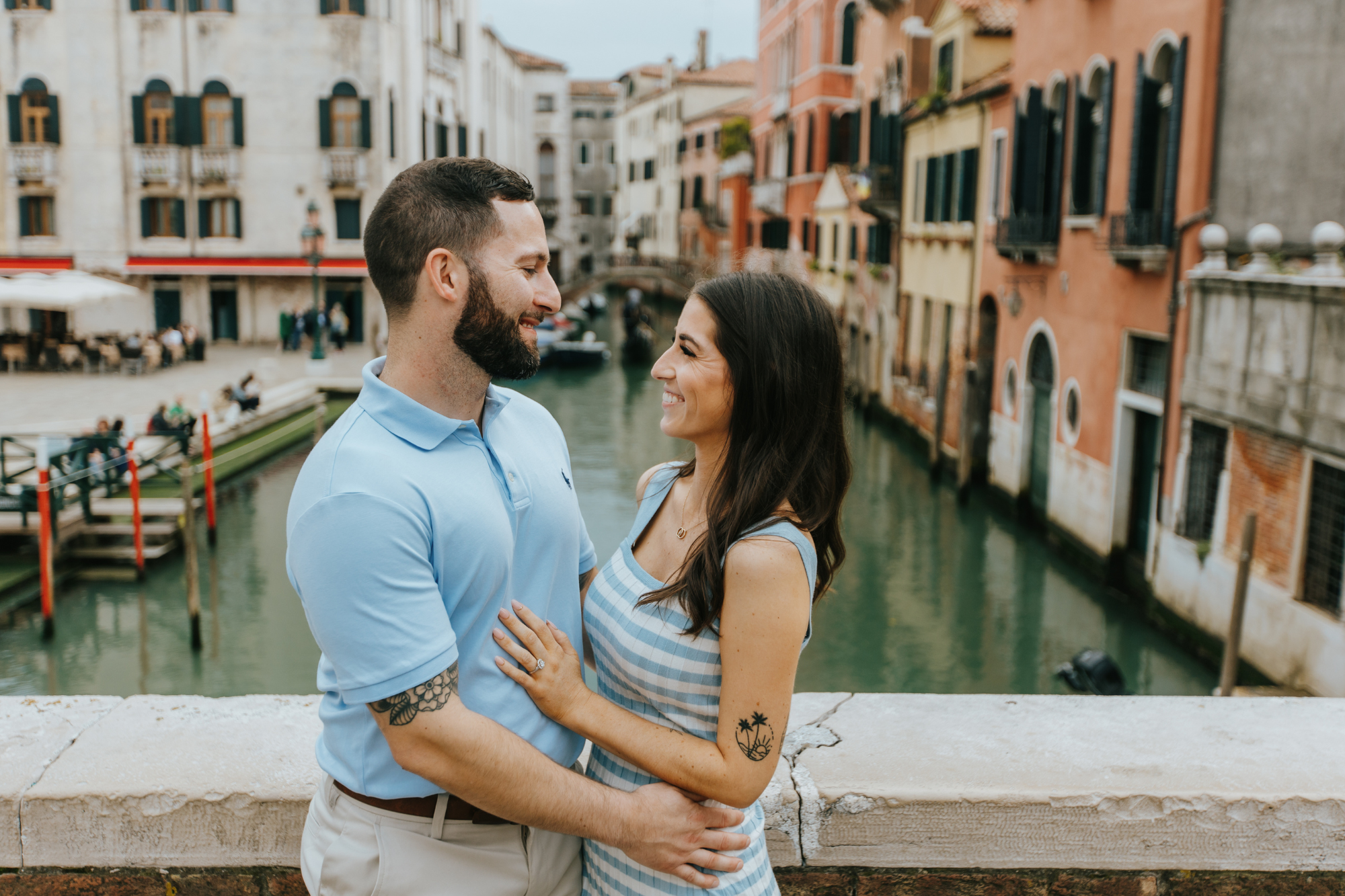
Proposal photoshoot by Camilla, Localgrapher in Venice
FAQ: Venice Photo Spots
What are the best photo spots in Venice?
Among all Venice photography locations, the ones that deliver the most consistent professional results are Piazza San Marco at sunrise, the Rialto Bridge from the Riva del Carbon steps at blue hour, the Accademia Bridge facing the Salute dome, the campanile of San Giorgio Maggiore at 9 AM, and Burano on the 6:50 AM vaporetto. For something less visited, the Cannaregio backstreets, the Libreria Acqua Alta bookshop, and the free Fondaco dei Tedeschi rooftop are favourites among our local photographers.
How do I get to the best Venice photography locations?
Most central locations (Piazza San Marco, Rialto, Accademia, Punta della Dogana, Cannaregio, Zattere) are reached on foot within 15 to 25 minutes from any central hotel. The lagoon islands (San Giorgio, Burano, Murano) need a vaporetto ticket ($11/€9.50 single, or a daily pass at $30/€25). Gondola rides are a fixed $107/€90 for a 30-minute private trip during the day and $130/€110 in the evening after 7 PM. Our Venice photographers can meet you at any location and plan the most efficient walking and water-bus route between several spots in a single session.
When is the best time of year for Venice photo spots?
The most consistent light is from October through April, with November and December offering the highest chance of soft overcast fog and possible acqua alta reflections. February (Carnival, 7 to 17 in 2026) is the most visually rich window of the year, but also one of the most crowded. June and July deliver the longest daylight but the harshest midday sun. August is the worst month overall: peak heat, peak crowds, and most Venetian shops closed for the summer ferie.
Why hire a local photographer instead of shooting Venice yourself?
Because the difference between a good Venice photo and a great one is almost always position and timing, and that knowledge takes a year of shooting the same locations to develop. A local photographer knows that the Accademia railing fills with four other tripods by 7:15 AM in winter, that the Fondaco rooftop slot books up six days ahead during peak season, and that the Cannaregio late-afternoon light only works between specific bridges. Our photographers in Venice are vetted, portfolio-reviewed professionals who live and work in the city year-round and know every one of these windows by heart.
Venice photo spots reward photographers who plan ahead and walk early. The city’s best windows, from the empty colonnade of San Marco at dawn to the blue-hour reflections at the Rialto and the painted morning light on Burano, each have a specific position and time when they peak. If you are still deciding where to take photos in Venice, whether for a couples session, a family portrait, or a solo editorial along the canals, with the right Venice photographer who knows those windows by heart, you stop chasing shots and start walking right into them.