
Iceland photo spots range from the mirror-still glacier lagoons of Jökulsárlón and the black basalt columns at Reynisfjara to the arrowhead peak of Kirkjufell in Snæfellsnes and the tidal reflections at Vestrahorn on the southeast coast. Most of them reward photographers who show up at the right hour of the right week, and the best time to do that is between mid-September and late March, when the Northern Lights, low winter sun, and empty ring road all overlap. This guide was written with input from Gabriel, Alexandra, and the rest of our Iceland photographers who shoot here year-round, not a tourist checklist, but an honest insider map of where the light lands, when the crowds disappear, and what TripAdvisor won’t tell you.
1. Kirkjufell: Iceland’s Most Photographed Mountain, at the Right Angle
Kirkjufell is the arrowhead-shaped peak on the north coast of the Snæfellsnes peninsula, and it is the single most photographed mountain in the country. But most visitors shoot it from the wrong bank at the wrong hour and go home with a flat pyramid and no foreground. Our Iceland photographers know better. The composition every editorial shooter references is not the roadside pull-off; it is the three-tier Kirkjufellsfoss waterfall on the opposite side of Route 54, which stacks the falls in the foreground with the mountain rising perfectly behind.
Shoot From the West Bank of Kirkjufellsfoss, Not the Parking Lot
Cross the small footbridge from the parking area on the northern side of Route 54 and walk to the west bank of the three-tier Kirkjufellsfoss waterfall. From here, the mountain sits perfectly framed behind the falling water, a composition our photographers have known for a decade. Arrive between 5:30 AM and 7:00 AM in June and July to catch the low midnight sun raking across the peak from the northeast, with the falls fully lit and zero tour buses in the lot. In winter (November to February), the same spot at 9:30 AM works: the sun barely clears the horizon and stays golden for two hours, and the mountain often carries a thin snow cap that separates it from the sky. Bring a wide 24 mm lens; a 50 mm crops out the top of the falls. Parking is free and open 24 hours, and the path to the west bank stays passable in all but the deepest snow.

“I shoot Kirkjufell in every season, and the light is completely different each time. My favorite is late September at 8 PM; the sun is dropping behind the peninsula, the falls glow orange for maybe fifteen minutes, and if you’re lucky, the aurora starts around 10:30 PM the same night. That’s the shot that changed my portfolio.”
— Gabriel, Localgrapher photographer in Iceland
2. Reynisfjara Black Sand Beach: The Basalt Columns You Have to Time Right
Reynisfjara is the black-sand beach outside the fishing village of Vík, backed by a wall of hexagonal basalt columns called Hálsanefshellir and the offshore Reynisdrangar sea stacks. It is one of the most cinematic Iceland photography locations, but shoot it wrong and it looks like every stock photo, or worse, you get pulled in by a sneaker wave. Our photographers time their sessions around the tide table, and the crowd flows from the Route 1 buses.
Basalt Columns at Low Tide, 90 Minutes After Sunrise
Check the Icelandic Met Office tide table before you go. Aim to arrive on the beach 90 minutes after sunrise on a rising tide day. The low sun sidelights the hexagonal columns from the east, the wet sand mirrors the sea stacks, and you have a two-hour window before tour buses from Reykjavík roll in around 11 AM. Stand at least 30 meters back from the waterline; sneaker waves at Reynisfjara have killed multiple visitors and can appear on a completely calm day. Parking at the beach is free but fills by 10 AM in summer. The smaller Dyrhólaey headland car park to the west, $3 (around ISK 400), gives you a top-down angle on the same beach and often no other cars in the lot. Best months are October and February for dramatic surf and low crowds.

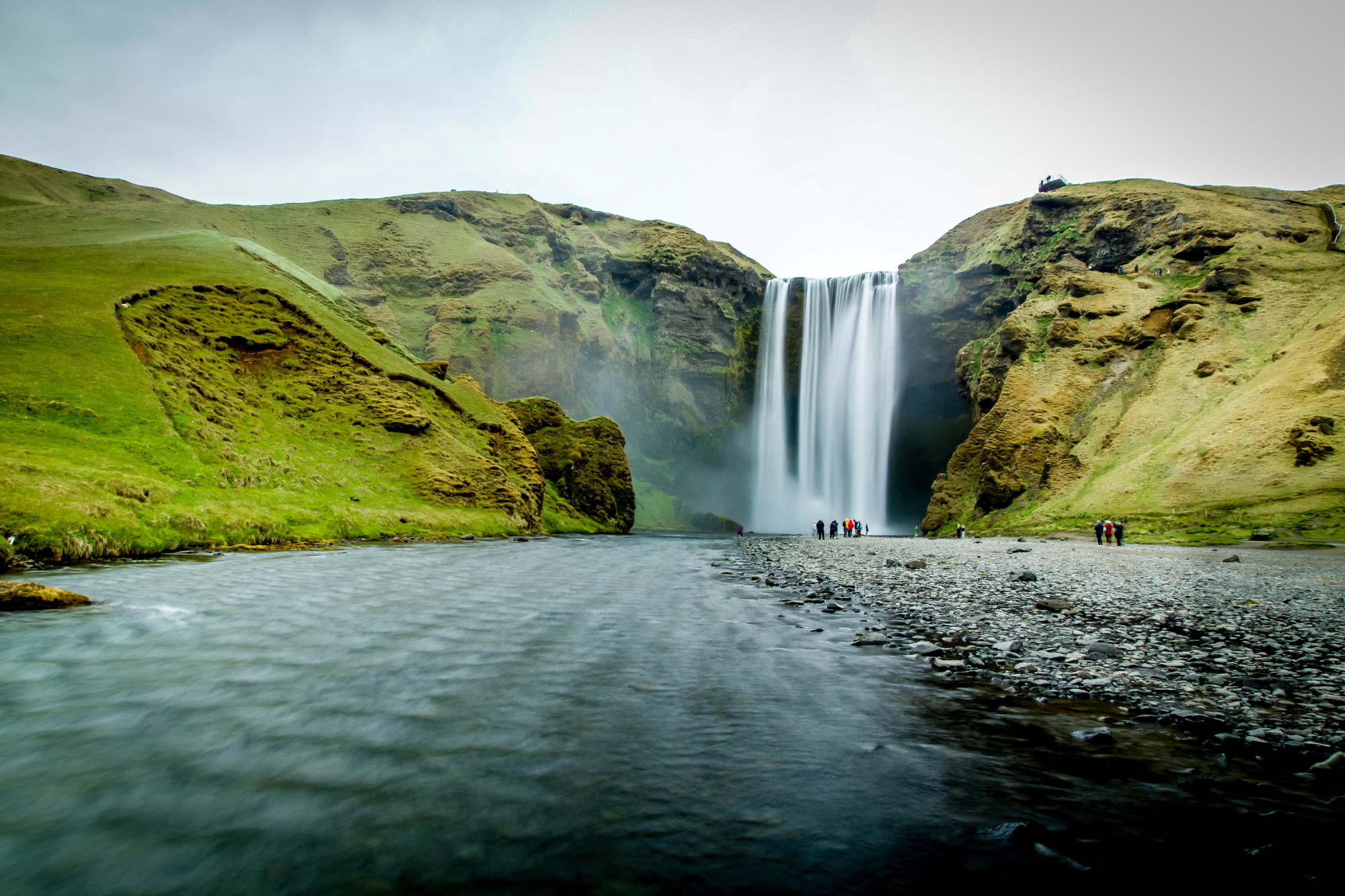
3. Skogafoss: The 60-Meter Curtain That Rewards a Two-Hour Hike
Skógafoss is a 60-meter curtain of water falling from the old sea cliff on the south coast, and it is one of the top Iceland photo spots because it is completely open to the public with no barriers, no entry fee, and no closing hours. Most visitors take a phone shot from the base and leave. Skip that. The frame that separates a good Skógafoss photo from a great one is the overlook halfway up the Fljotsdalur trail, reached from a metal staircase on the east side of the falls.
Climb the East Staircase to the Fljotsdalur Trail Overlook
There is a metal staircase on the east side of Skógafoss with 527 steps to the top. Climb it at 7:00 AM in summer or 10:30 AM in winter, and the trail continues north along the Fljotsdalur/Fimmvörðuháls track for 200 meters to a series of overlook points where you can shoot straight down the throat of the falls with the black-sand beach in the distance behind you. This angle is virtually unknown to day visitors and gives you an aerial-style composition without a drone. Bring a rain sleeve; the mist reaches the top on windy days, and expect to wipe your front element every three or four exposures. For a full breakdown of Iceland photographer pricing and what a session at Skógafoss typically includes, see our Iceland photographer cost guide.
4. Seljalandsfoss and Gljufrabui: The Two-For-One Waterfall Stop
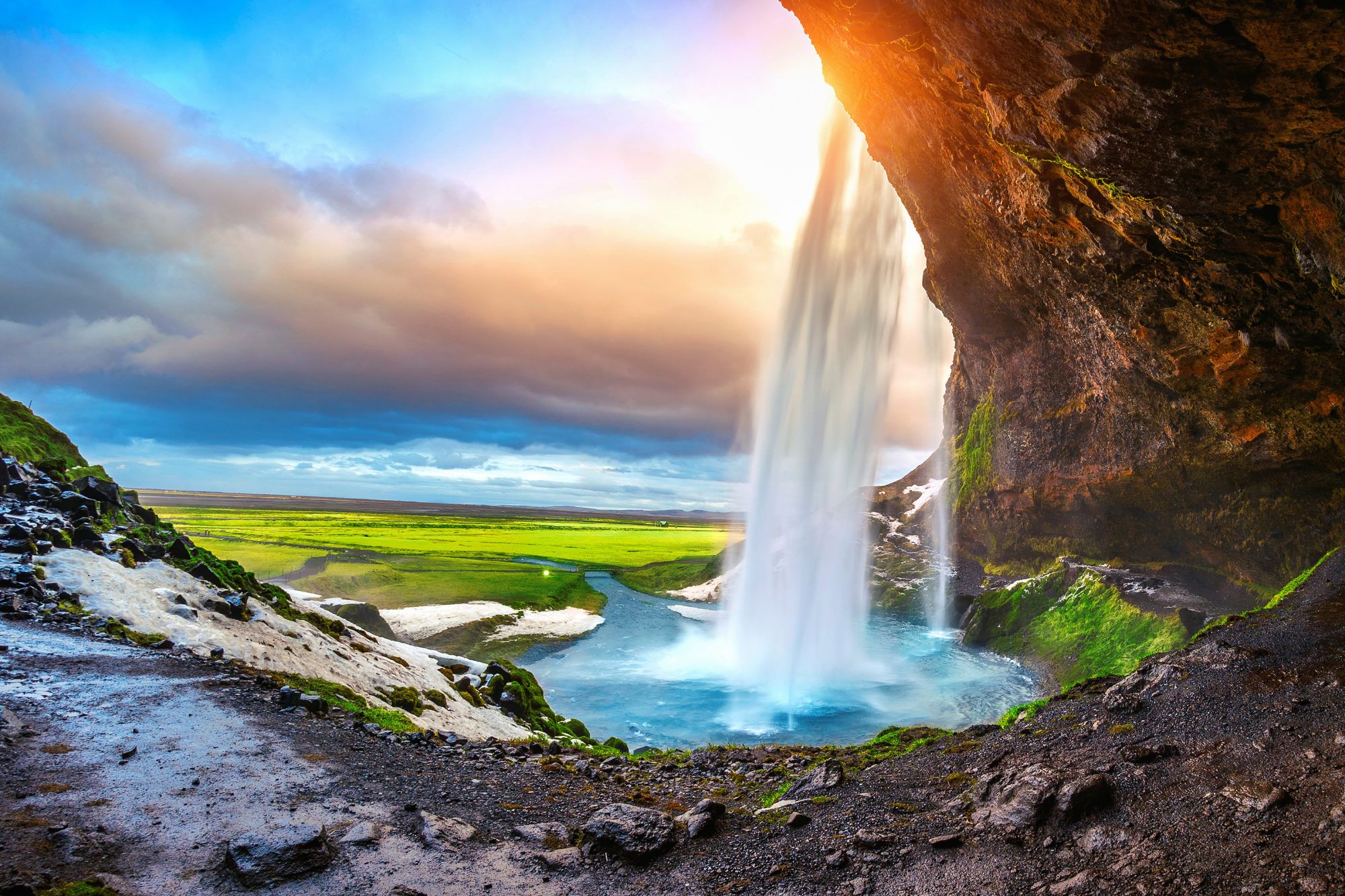
Seljalandsfoss is famous because you can walk behind it, a 60-meter drop with a path that circles the whole face. Six hundred meters north on the same cliff line hides Gljúfrabúi, a waterfall almost nobody photographs because it is tucked inside a slot canyon and you have to wade a shallow creek to reach it. Together they give you two entirely different visual moods on a single parking ticket.
Behind Seljalandsfoss at Golden Hour, Then Wade Into Gljúfrabúi
Enter the path behind Seljalandsfoss between 8:00 PM and 10:00 PM in June (or 3:30 PM in December) for warm backlight through the water sheet. Wear waterproofs; you will get soaked. Then walk north along the base of the cliff, cross the shallow creek at the entrance of Gljúfrabúi (rubber boots or sandals required), and stand inside the mossy chamber. The hidden waterfall enters through a slot in the roof and gives you an otherworldly shaft of light between 11:00 AM and 1:00 PM in summer. Parking at Seljalandsfoss costs $6 (around ISK 800) and covers both falls; there are no ticket booths for the falls themselves, and the lot fills fast in July.
5. Jokulsarlon Glacier Lagoon and Diamond Beach: Ice on Black Sand
Jökulsárlón is the deepest lake in Iceland, formed by the retreating Breiðamerkurjökull glacier tongue. Icebergs calve into the lagoon, drift slowly toward the mouth of the outlet, float out under the Route 1 bridge, and wash back onto the black volcanic beach on the other side, the famous Diamond Beach. It is the single most striking of all Iceland photo spots because two entirely different scenes sit 400 meters apart.
Diamond Beach at Sunrise, Then Cross to the Lagoon
Park in the eastern lot at Jökulsárlón (free, but full by 10 AM June to August) and walk south to Diamond Beach. Arrive at sunrise: in winter that is around 11:00 AM (yes, really), in summer it is 3:30 AM, but the icebergs are far fewer. The winter window is genuinely magical; the ice glows blue and orange as it catches the low sun, and you have 30 to 45 minutes before the first buses. After the beach, cross the road and walk west along the lagoon shore for reflection shots of the icebergs against the glacier. Boat tours run $65 (around ISK 8,900) in the amphibian vehicles and about $115 (around ISK 15,700) on the smaller Zodiac boats. Both leave from the western lot and require pre-booking in summer.

“Diamond Beach at winter sunrise is the shot I recommend to every couple who comes to Iceland. In late December you get pastel pink light for almost an hour because the sun stays so low, and every single iceberg on the sand acts like a little prism. I have shot there in July too, but honestly, nothing beats a windless December morning.”
— Alexandra, Localgrapher photographer in Iceland
6. Pingvellir National Park: Standing on Two Continents
Þingvellir is the only place on land where you can walk between the North American and Eurasian tectonic plates. It sits an hour east of Reykjavík on the Golden Circle loop and is one of the most underused Iceland photography locations for portraits, because most people focus on the historic significance (the world’s oldest parliament sat here in 930 AD) and miss the graphic possibilities of the rift walls themselves.
Almannagjá Rift Wall at 8 AM Before the Golden Circle Buses
Enter the park through the P1 lot (parking is $6 or around ISK 800) and walk the Almannagjá gorge from the visitor center down to the Öxarárfoss waterfall. Between 8:00 AM and 9:30 AM, the sun angles through the north end of the gorge and lights the rift walls from above; the moss glows, and the shadows go deep. This is the two-continent shot: put a subject on the wooden path with the rift wall on the left and the flag of Iceland on the ridge behind. Silfra, the freshwater fissure where you can snorkel between the plates, sits fifteen minutes north; dive tours run around $220 (around ISK 30,000), and the water is a permanent 2 °C year-round.

7. Blue Lagoon and Sky Lagoon: Steam and Light in the Right Half Hour
The Blue Lagoon outside Grindavík and Sky Lagoon on the edge of Reykjavík are both engineered geothermal pools, but they photograph very differently. Blue Lagoon has milky turquoise water surrounded by black lava fields, while Sky Lagoon has a 70-meter infinity edge overlooking the North Atlantic. Both make excellent portrait backdrops if you can get in at the right hour of the right day.
Sky Lagoon at 4 PM in Winter, Blue Lagoon at 7 AM
Blue Lagoon opens at 7:00 AM, and the first 90 minutes are the only window when the lagoon is quiet enough for wide, clean shots without other bathers. Book the earliest slot; standard entry is around $75 (around ISK 10,300). Sky Lagoon is better in the afternoon. Arrive at 4:00 PM in December and stay through sunset at 3:45 PM (you read that right; in December the sun sets before the lagoon shift changes over). The infinity edge frames the sea and the sky and, on a good aurora night, the Northern Lights appear over the water starting around 9:00 PM. Bring a waterproof phone pouch; DSLRs are not allowed in either lagoon without prior arrangement with management.

8. Hallgrimskirkja and the Sun Voyager: Reykjavik’s Twin Icons
If you have a few hours in the capital between road trips, two structures give you the best places for photos in Iceland’s only real city. Hallgrímskirkja is the 74-meter concrete basalt-column church that dominates the skyline; the Sun Voyager (Sólfar) is Jón Gunnar Árnason’s steel Viking-ship sculpture on the harbor promenade. They pair perfectly in a single afternoon and cover almost every urban composition Reykjavík offers.
Hallgrímskirkja Tower at 10 AM, Sun Voyager at 11 PM Midsummer
Enter Hallgrímskirkja from the south door and take the elevator to the 8th-floor viewing platform: $12 (around ISK 1,650), open 9:00 AM to 5:00 PM in winter and until 9:00 PM in summer. From the north window, Reykjavík’s colored roofs and the mountain Esja frame the shot; from the west window, you get the harbor at golden hour in July. The Sun Voyager sculpture on Sæbraut is best at 11:00 PM in June (midnight sun through the ribs of the ship) or at 4:30 PM in December (the winter sun sits right behind the bow). Parking on Sæbraut is metered $2 per hour (around ISK 275 per hour) between 9 AM and 6 PM, and free after that.

9. Gullfoss: The Two-Tier Waterfall That Almost Nobody Shoots From the Right Deck
Gullfoss is the last of the Golden Circle three, a two-stage waterfall dropping 32 meters into the Hvítá canyon. It gets an enormous volume of tourists year-round, but very few of them walk down to the lower viewing deck where the actual scale becomes visible. From the parking lot, it looks like a large but ordinary cascade. From the lower deck, it looks like it might swallow you whole.
The Lower Deck at 4 PM in September, Ice Coating in January
Park in the lower lot (free) and walk down the metal staircase to the lower deck at the edge of the second drop. This is the frame that shows the full scale of the falls: the mist rises 40 meters into the canyon, the water turns the color of dark tea from suspended sediment, and in September the afternoon sun cuts sideways through the mist for rainbow arcs from about 3:30 PM to 4:30 PM. In January, ice sheets coat the canyon walls and the whole scene turns silver-blue; wear crampons ($20 or around ISK 2,750 for grip covers at the visitor center). Avoid midday tour buses. Arrive before 9:30 AM or after 5:00 PM for a clear deck.

10. Vestrahorn at Stokksnes: The Mountain That Sits on a Mirror
Vestrahorn is the jagged 454-meter mountain on the Stokksnes headland outside Höfn on the southeast coast. It sits directly behind a black volcanic beach that fills with a shallow tidal sheet — the closest thing Iceland has to a perfect natural mirror. It is, hands down, the most rewarding location for photographers willing to drive the extra four hours from Reykjavík.
The Tidal Flats at 30 Minutes After Sunset in Any Season
Access is through the Viking Cafe on Route 1; the entry fee is $12 (around ISK 1,650) per person and covers unlimited access for the day plus the reconstructed Viking film-set village on the same headland. From the beach parking area, walk 400 meters south onto the tidal flats. Time your arrival to 30 minutes after sunset: the sky turns lilac, the water on the sand goes glass-still, and you get a perfect reflection of Vestrahorn with a black foreground. In September and March, the same spot doubles as the best Northern Lights foreground on the south coast; wait until 10:30 PM and shoot 15 seconds at f/2.8, ISO 3200. Bring waterproof shoes because the tidal sheet is up to 3 cm deep across the whole flat.

“I always tell clients that Vestrahorn is the location that decides whether you take Iceland pictures or Iceland photographs. The mirror on the black sand only holds for maybe twenty minutes after sunset. Get it right, and you can produce one image that stops people scrolling for a week.”
— Gabriel, Localgrapher photographer in Iceland
Best Time of Day for Photos in Iceland
Getting the timing right matters more at Iceland photo spots than almost anywhere else in Europe, because the light quality changes drastically between the six-hour winter days and the 22-hour midsummer days. Weather also shifts every 20 minutes on the south coast, and driving conditions vary between paved highway and slush the whole ring road round. Our photographers plan sessions around the season first, and everything else second.
Seasonal Windows and Aurora Nights
Golden hour (winter): from November to February, the sun stays low for the whole day. “Golden hour” effectively runs from 10:00 AM to 4:00 PM around the December solstice, and the horizontal light is exceptional for portraits at any of the south coast waterfalls or at Jökulsárlón.
Golden hour (summer): from mid-May to late July, the sun barely sets. The best light windows shift to 10:00 PM through 2:00 AM (midnight sun on the peninsulas) and 3:00 AM through 5:00 AM (soft dawn on the south coast).
Worst light window: 11:00 AM to 2:00 PM between April and August. The high summer sun bleaches the whites out of the ice at Jökulsárlón and washes the moss colors flat at Þingvellir.
Season-specific notes:
- Winter (Dec to Feb): Aurora season peak, blue hour lasts three hours, snow on every mountain, but short shooting windows and icy roads.
- Shoulder (Mar to Apr, Sep to Oct): The single best season for photography, with aurora still visible, waterfalls not frozen, roads open, fewer tourists.
- Summer (Jun to Aug): Midnight sun, all F-roads open to the highlands, wildflowers in bloom, but very crowded and no aurora.
- Wet shoulder (May, Nov): Moody weather, dramatic clouds, cheap flights, waterfalls at peak volume from spring runoff or first winter storms.
- Aurora forecast: check the Icelandic Met Office Kp index the night before; a Kp of 3 or higher is a green light for a shoot at Vestrahorn or Kirkjufell.
The hidden advantage of the shoulder months (mid-September and mid-March): you get every single Iceland photography location without the crowds, waterfalls still liquid, aurora on clear nights, and rental cars at half the summer price. Our Iceland photographers often prefer these months for portrait work. For the full picture on timing, outfits, and what to expect on the day itself, our Iceland photoshoot guide has everything you need before you book.

Solo photoshoot by Gabriel, Localgrapher in Iceland
“March and September are my favorite months to shoot Iceland. The aurora is back, the light is still golden for hours, and I can drive to Vestrahorn or Kirkjufell without hitting a single tour bus. That combination almost never happens anywhere else in Europe.”
— Alexandra, Localgrapher photographer in Iceland
FAQ: Iceland Photo Spots
What are the best Iceland photo spots?
Among all Iceland photography locations, the ones that deliver the most consistent professional results are Kirkjufell in Snæfellsnes (from the west bank of Kirkjufellsfoss), Reynisfjara black sand beach (90 minutes after sunrise), Diamond Beach and Jökulsárlón at winter sunrise, Vestrahorn at Stokksnes 30 minutes after sunset, and Skógafoss from the upper Fljotsdalur trail. Those same five top almost every list of Iceland Instagram spots, but the timing windows above are what separate a professional frame from a phone snap at the same railing. For something less-visited, the Almannagjá gorge in Þingvellir and the tidal chamber inside Gljúfrabúi are favorites among our local photographers, and both give you a portrait style that no other location in the country matches.
Where do the best photography spots in Iceland actually sit on the map?
Most sites on this list require a rental car. Iceland has almost no public transport outside Reykjavík, and the ring road (Route 1) circles the country in roughly 1,332 kilometers. Budget $70 (around ISK 9,600) per day for a compact 4×4 in shoulder season and roughly double that in July. Reykjavík city spots (Hallgrímskirkja, Sun Voyager, Sky Lagoon) are walkable or a $12 (around ISK 1,650) taxi ride from downtown. Our Iceland photographers can meet you at any of the ten locations above and often coordinate a shared route if you are chaining several in one day.
Why hire a local Iceland photographer instead of shooting these locations yourself?
Because the difference between a good Iceland photo and a great one is almost always timing and position, and that knowledge takes years of shooting the same locations through every season to develop. A local photographer knows that the Vestrahorn mirror only holds for twenty minutes after sunset, that the Kirkjufell west bank clears by 6:30 AM, and that the Diamond Beach icebergs are ten times better in a rising-tide winter dawn than in a July midday. They also handle logistics: knowing which F-roads are passable that week, where the Ring Road speed cameras sit, and how to time a Golden Circle loop against tour bus schedules. Our photographers in Iceland are vetted, portfolio-reviewed professionals who shoot here year-round.
Where are the best places for photos in Iceland for aurora backgrounds?
The Northern Lights are not guaranteed at any Iceland photo spot; aurora photography depends on solar activity (Kp index), cloud cover, and light pollution. The best Iceland photography locations for aurora backgrounds are Kirkjufell (dark north-facing horizon), Jökulsárlón (reflection in still water on calm nights), Þingvellir (rift-wall foreground), and Vestrahorn (mountain silhouette). Peak aurora season runs September to March. Book two nights minimum at any spot to raise your odds; our photographers monitor forecasts and can reschedule sessions with a few hours’ notice if the Kp index jumps.
Iceland rewards photographers who plan ahead and wake up early — or, in winter, wake up late. The country’s best photography locations, from the mirror-black tidal flats at Stokksnes to the mist-cloaked curtain of Skógafoss and the calving icebergs at Jökulsárlón, each have a specific window when the light and crowd conditions align perfectly. With the right Iceland photographer who knows those windows by heart, you stop chasing shots and start walking into them. If you’re still deciding where to take photos in Iceland, whether for a couples shoot, a family session, or a solo portrait series on the Ring Road, Iceland photo spots deliver an extraordinary variety in a single small country. Most of these locations are within a day’s drive of Reykjavík, and our local photographers can plan a route that hits three or four on the same trip, so you stop chasing shots and start walking into them.