
Edinburgh holds its character in its light. The city sits at 55.95 degrees north, which means the sun arcs low for most of the year and the shadows that fall across the closes of the Old Town, the lawns of Princes Street Gardens, and the volcanic flank of Arthur’s Seat are softer, longer, and more directional than almost anywhere south of here. That is what makes the best Edinburgh photo spots so productive, and it is also what catches first-time visitors off guard. Show up at the wrong hour or the wrong angle, and the same gothic skyline that fills a postcard turns into a wash of grey stone with no depth.
The good news is that Edinburgh is small. Most of the best places for photos in Edinburgh sit within a 20-minute walk of one another, and the ones that do not (the Royal Botanic Garden, Dean Village, Arthur’s Seat) reward an early start with the cleanest light of the day. This guide was written with input from Sofia, Sergejus, Mairi, Rachel, and Viktor, our Edinburgh photographers who shoot these locations week after week. It is not a tourist checklist, but an honest insider map of where the light lands, when the crowds disappear, and what TripAdvisor will not tell you.
1. The Vennel: The Postcard Castle Frame, Without the Tripod Queue
The Vennel is the angle that travel guides keep coming back to: a flight of stone steps narrowing between two tenement walls, with Edinburgh Castle framed dead centre at the top. The frame works because the converging walls funnel the eye straight to the ramparts, and the cobbled landing at the base gives you a clean foreground line. It is also one of the few city-centre Edinburgh photography locations where you can isolate the Castle without scaffolding, traffic signs, or Grassmarket rooftops cutting across the lower third.
The catch is access. The Vennel is a working close where local residents use the steps as a shortcut to the Grassmarket, and by 9 AM, the queue of tripods at the top step turns the spot into a logistical nightmare.
5:45 AM in Summer, 7:30 AM in Winter — Non-Negotiable
We send couples to the Vennel at 5:45 AM in summer (sunrise is just after 4:30, but the light at 5:45 is the sweet spot before the harsh contrast kicks in) and at 7:30 AM in winter, which still buys 30 to 40 minutes of empty steps and soft, raking east light skimming across the Castle stone. In drizzle, the cobbles turn reflective, and the wet stone doubles the Castle silhouette in the lower third, and Mairi keeps a small library of frames from drizzle mornings that look impossible to recreate on a clear day. Stand on the third step from the bottom, not the landing. The perspective compression there pulls the Castle visually closer and lines the walls into a perfect V. Bring a wide-ish lens (24 to 35mm) for the full corridor or step back to 50mm to compress the Castle larger in the frame.

“Everyone wants the Vennel on a bright, clear morning, but the frames I keep coming back to are the drizzle ones. Around 5:45 in summer, with the cobbles wet and the steps empty, the Castle doubles in the reflection at the bottom, and the whole close goes soft and a little unreal. I shoot from the third step up, never the landing, because that V of walls pulls everything toward the ramparts. It is the most romantic ten minutes Edinburgh gives you.”
— Mairi, Localgrapher photographer in Edinburgh
2. Calton Hill: The City Panorama in a Single Frame
Calton Hill is the panorama shot. A ten-minute walk up Regent Road delivers you to the National Monument (the unfinished columns sometimes called Edinburgh’s Disgrace), the Dugald Stewart Monument (the circular Greek temple that fills every Instagram grid), and a 360-degree sweep that takes in the Castle, the Old Town spine, Arthur’s Seat, and the Firth of Forth in a single frame.
The trick on Calton Hill is choosing your hour. Sunrise (east-facing across the Firth) is dramatic in summer when the light arrives over the water around 4:30 to 5:30 AM. Blue hour, the 30 to 45 minutes after the sun drops, is the genuinely magic window because Edinburgh’s street lights ignite while the western sky still holds saturation. At Calton Hill’s latitude, the blue hour stretches significantly longer than it would in southern Europe, and we routinely get a 40-minute usable window in June. There is no entry fee, and the path up is open 24 hours.
The Dugald Stewart Monument From Low and Close
Position the subject 6 metres in front of the Dugald Stewart Monument and shoot from low, almost at the base of the columns. The Greek temple becomes a halo behind the head instead of a busy backdrop. From the base of the National Monument, the row of columns gives you strong leading lines and silhouette potential at sunset. Blue hour here is one of the best Instagram spots Edinburgh has anywhere, and the panorama behind your subject reads as a film still rather than a tourist snapshot. If you are climbing for sunrise in summer, the east face of the National Monument catches the first light fifteen minutes before the city below does.

3. Victoria Street and West Bow: The Painted Curve
Victoria Street curves down from the Royal Mile to the Grassmarket in a gentle arc, and the row of painted shopfronts (red, yellow, blue, green) has earned the spot its reputation as the most photographed street in Scotland. The frame work, whether you shoot from above (the Upper Bow terrace) or from below (the Grassmarket end), and the curve itself does most of the compositional work.
Crowds are the issue. By 10 AM, Victoria Street is full of foot traffic spilling out of cafés and gift shops. We schedule sessions here at 7 to 8 AM, which gives you an empty curve, lights still on inside the shopfronts (warm interior glow against the cool morning blue), and clear shutters before the shop displays go up.
From the Upper Bow With a 50mm, Looking Down
If you can only shoot one frame, take it from the Upper Bow looking down. The higher angle compresses the curve and stacks the painted shopfronts into a clean colour ladder, and the Grassmarket spire pokes up at the end of the street. From the Grassmarket end looking up, the climb of the cobbles toward Victoria Terrace gives you more depth but a busier backdrop. Shoot at 50mm from the bottom of the steps at the south end of the Upper Bow, and the curve compresses, the shopfronts ladder cleanly, and the spire anchors the top of the frame.

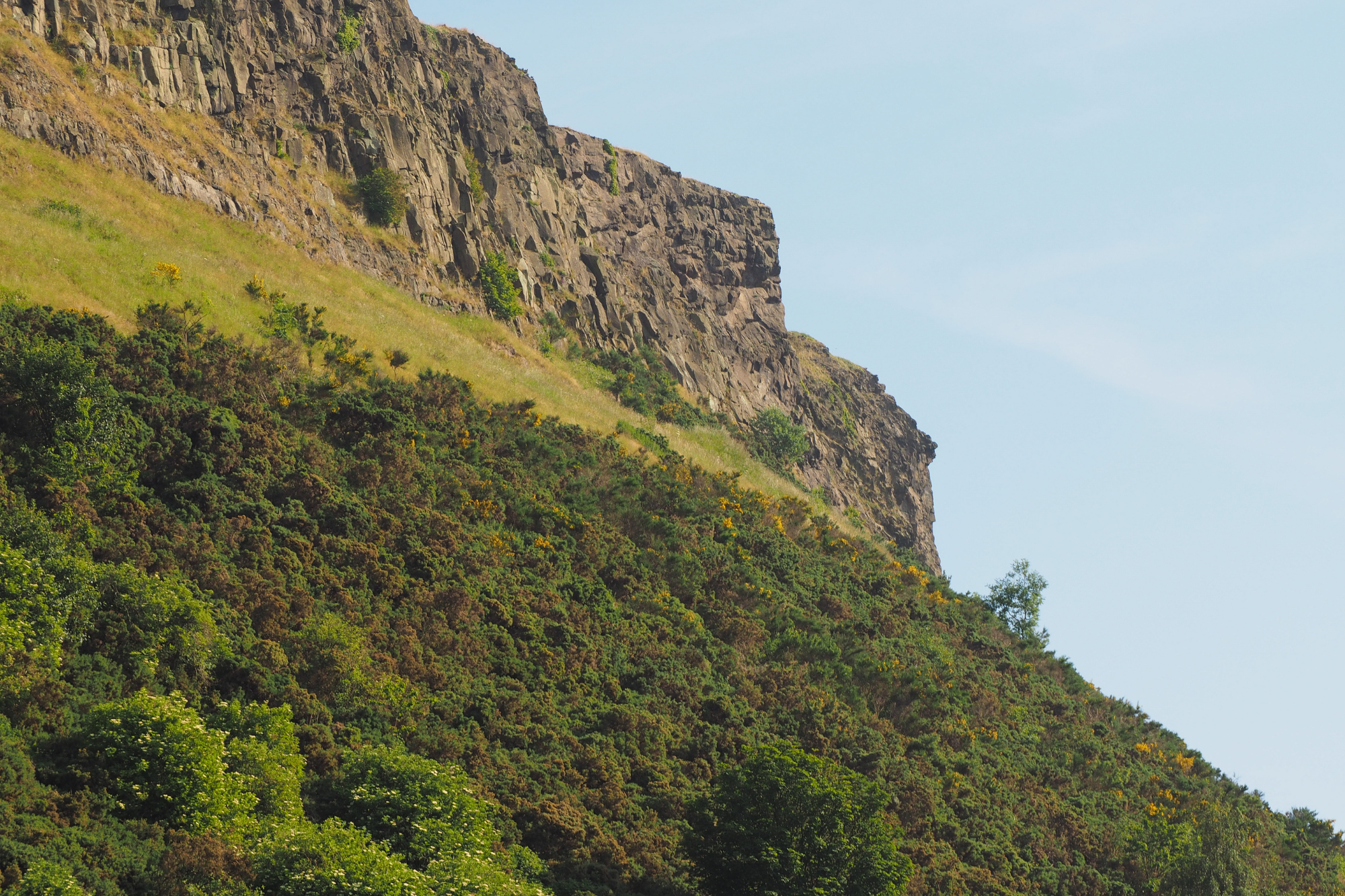
4. Arthur’s Seat and the Salisbury Crags: The Volcanic Panorama
Arthur’s Seat is the volcanic plug that rises 251 metres above the city and gives you the cleanest, most uncluttered view of Edinburgh you will find anywhere. The full summit hike takes 40 to 60 minutes from the Holyrood car park, and the path is steep in places, but the lower viewpoints (Salisbury Crags and the Radical Road) deliver almost the same panorama for a fraction of the climb.
We send sunrise sessions here in the warmer months when the sun comes up over the Firth in the east and lights the city from behind, which puts Edinburgh into perfect rim-lit silhouette. In winter, the late afternoon light from the west is more usable because the sunrise window is so short and so cold. The Salisbury Crags ridge is also where we run most of our discreet proposal sessions, with the cliff edge, the city sweep behind, and the option to position the photographer 40 to 50 metres back with a telephoto. There is no entry fee, no gate, and the park is open 24 hours.
Walk 200 Metres Past the Standard Viewpoint
Walk 200 metres past the standard tourist viewpoint at the top of the Radical Road, and the city spreads out wider, the Salisbury cliff drops cleanly into the frame, and you will likely have the ridge to yourself. Bring grip, because the volcanic basalt is slippery in drizzle, and a light layer even in July, because the wind on the ridge is reliably ten degrees cooler than the city centre. For a full breakdown of how our team positions discreet ring-shots up here, see our Secret Proposal in Edinburgh guide.
5. Dean Village: The Storybook Valley Ten Minutes From Princes Street
Dean Village is the surprise of every first visit to Edinburgh, a former milling community tucked into a steep valley along the Water of Leith, ten minutes’ walk from Princes Street, but feeling like a separate village from another century. Pantile roofs, ochre and cream rendered walls, and a stone bridge over the river give the spot a storybook quality that contrasts directly with the gothic mass of the Old Town.
The classic frame is the view downstream toward Well Court from the Bell’s Brae bridge, with the red-roofed buildings clustered around the curve of the river. Shoot it in late morning when the sun finally clears the valley walls and the warm wall colours come alive. Earlier than that, the village stays in deep shade, which can work for moody frames but kills the architectural colour. Dean Village has become much busier in the last three years (the Instagram effect, frankly), so we typically schedule sessions here at 8 AM or after 6 PM in summer when the day-trippers thin out.
From the Bell's Brae Bridge, Tilted Down
Lean against the stone parapet on the Bell’s Brae bridge, tilt down slightly, and frame the river curve in the lower third. The diagonal of the water leads the eye directly into the cluster of red roofs at Well Court. The Water of Leith Walkway continues from here all the way to Stockbridge in one direction and the Royal Botanic Garden in the other, which makes Dean Village an ideal mid-walk anchor rather than a single-frame stop. For families with smaller children, the walkway is flat, paved, and stroller-friendly, which is rare in central Edinburgh.

“Dean Village is all about colour for me, and the trick is patience. Get there too early, and the whole valley sits in shade, which kills those ochre and cream walls that make the place. I wait for the sun to clear the valley rim, usually around 10 in the morning, when the warm tones switch on and the red roofs at Well Court glow. From the Bell’s Brae bridge it photographs like a storybook nobody believes sits ten minutes from Princes Street.”
— Rachel, Localgrapher photographer in Edinburgh
6. Princes Street Gardens and the Ross Fountain: The Iconic Castle Foreground
Princes Street Gardens sit in the old loch valley between the New Town and the Castle ridge, and the Ross Fountain (the cast-iron, three-tiered fountain at the west end) has been the New Town’s most photographed feature since its 1872 restoration. The frame puts the fountain in the foreground, the Castle silhouette in the upper third, and a sweep of garden lawn pulling the eye through the middle ground.
The gardens are free and open from 7 AM (East Gardens) and sunrise in winter for the West Gardens, where the fountain sits. Spring (tulips), early summer (rhododendrons along the lower walk), and autumn (the leaves on the slope below the Castle) each give you a completely different palette around the same composition. Avoid summer Saturdays, because events on the Ross Bandstand can close access to the lower walk. The other strong angle in the gardens is from the South Gardens path looking up at the Castle on its volcanic rock, where the slope drops away dramatically beneath the ramparts, and the perspective makes the Castle feel twice as tall as it does from George Street.
Kneel 15 Metres West of the Fountain
Stand on the lower garden path 15 metres west of the Ross Fountain, kneel to lower your camera height, and the basin of the fountain lines up perfectly with the Castle’s North Battery in the background. Combined with the Vennel, this is the canonical Castle pairing in Edinburgh photography locations, one wide foreground composition and one tight stone-step compression. Couples sessions here work especially well around 7:30 AM in summer, when the gardener crews have not started watering the lower beds and the gravel paths are completely empty.
7. The Royal Mile and Cockburn Street: Gothic Spire and Cobbled S-Bend
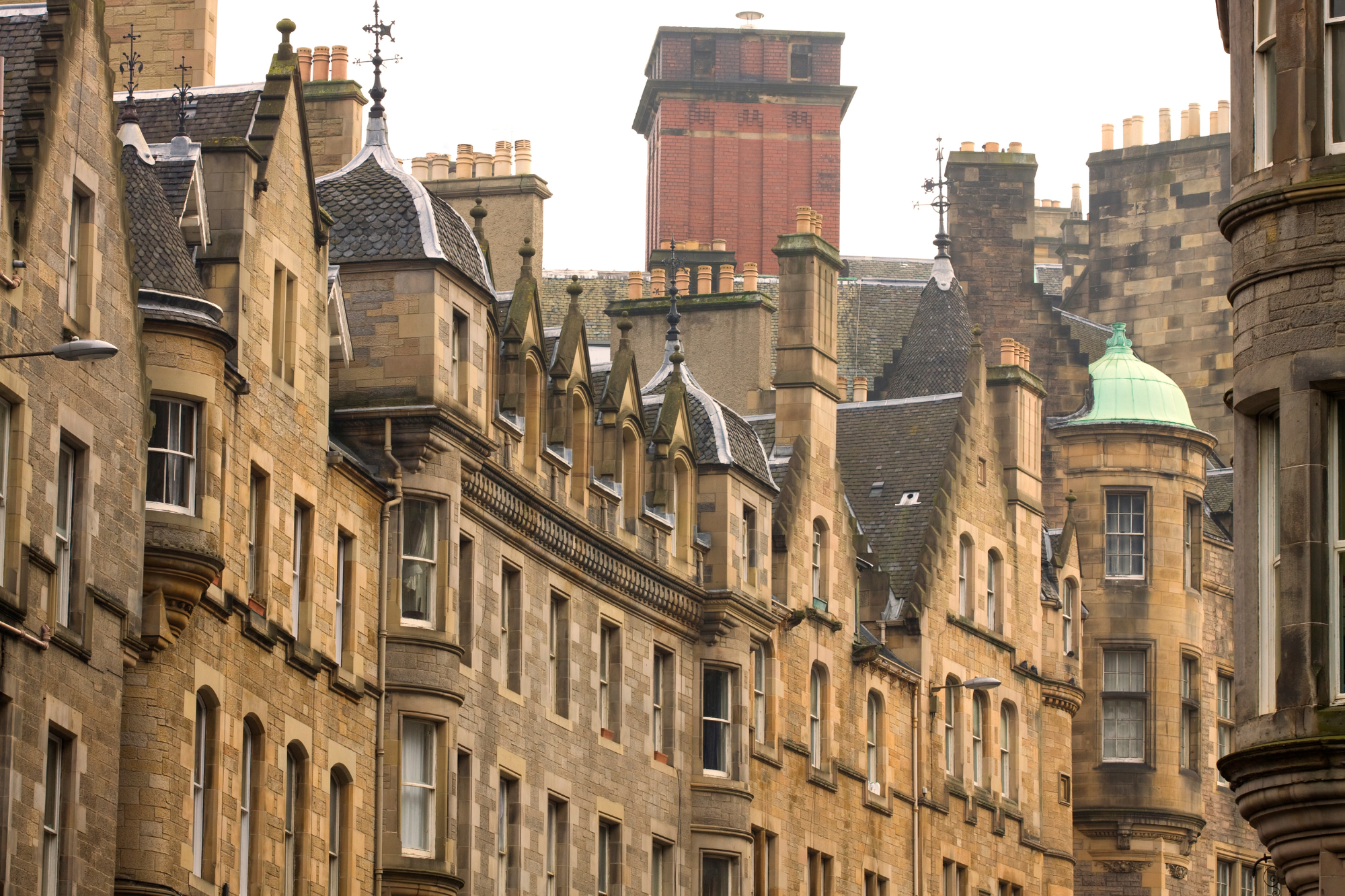
The Royal Mile is technically four streets (Castlehill, Lawnmarket, High Street, and Canongate) running from the Castle to Holyrood Palace. The whole length is photogenic, but two specific angles do most of the work: the Lawnmarket looking east toward St. Giles’ Cathedral, and the head of Cockburn Street where the road curves dramatically downhill in a cobbled S-bend toward Waverley.
St. Giles’ Cathedral and its distinctive crown spire is the dominant Old Town silhouette. Frame it from outside the Writers’ Museum (Lady Stair’s Close) for the cleanest angle. Cockburn Street’s curve compresses beautifully at 50 to 85mm, with iron lamp-posts giving you regular vertical anchors and the Old Town tenements piling up on either side. The Royal Mile fills up by 10 AM in summer and stays full until late evening because of the bagpipers, street performers, and tour groups, so 7 to 8:30 AM is the only reliable window for an uncluttered frame. In December, the festive lights are up, and the empty cobbles at 4 PM dusk look unbelievable.
Top of Cockburn Street at 70mm, Facing Downhill
Stand at the very top of the curve on Cockburn Street, facing downhill, and shoot at 70mm or longer. The lampposts compress into a regular rhythm, the tenement gables stack on either side, and the curve of the street disappears behind itself into Waverley. For a different mood on the Lawnmarket, kneel by the kerb outside Lady Stair’s Close and frame St. Giles’ crown spire above a solo subject in the middle distance. The wider 35mm angle works when the Royal Mile is empty (very early or just after sunset on a winter weekday), and the 85mm compression hides any stray foot traffic on busier mornings.
8. The Royal Botanic Garden and Inverleith House: Skyline Across the Lawn
The Royal Botanic Garden Edinburgh sits 20 minutes north of Princes Street and is one of the few city-centre locations where you can frame an open lawn, a mature canopy, and the Edinburgh skyline (Castle, Calton Hill, Arthur’s Seat) in a single horizontal sweep. The Inverleith House lawn, on the northern edge of the garden, is the spot, with the Georgian house behind, the city skyline ahead, and rain trees flanking the lawn that diffuse the morning light into something soft and even.
Entry to the main garden is free; the glasshouses charge separately. Open from 10 AM most of the year (with 7 AM access in summer for early ticket holders), the garden is at its richest in late April (cherry blossoms along the Chinese Hillside), May (rhododendron walk), and October (the maple slope by the East Gate). We send family sessions here for the open running room and the variety, because you can move from the lawn to the rock garden to the woodland in 15 minutes and get three completely different looks without leaving the perimeter.
East Gate at Opening, Straight to Inverleith Lawn
Arrive at the East Gate at opening, walk straight to the Inverleith House lawn, and position the family on the lawn facing the Georgian portico. The skyline behind appears compressed by the rain trees, and the morning light is soft enough that no fill flash is needed. With children in the frame, the lawn gives you 50 metres of open running space, which is rare in central Edinburgh and turns the session from posed portraits into candid movement. Bring a single layer extra: even in July, the Stockbridge side of the city runs two degrees cooler than the Old Town.

9. Stockbridge and Circus Lane: Mews Cobbles and the Bell Tower
Stockbridge is the quieter neighbourhood north of the New Town, originally a separate milling village absorbed by Edinburgh in the 19th century. Cobbled lanes, independent cafés, and the small Sunday market on Jubilee Gardens give the area a softer, more intimate scale than the Old Town’s gothic intensity. The two specific frames that bring photographers here are Circus Lane and the Water of Leith at Stockbridge proper.
Circus Lane is a cobbled mews curving behind St. Stephen’s Church, with window boxes spilling geraniums and ivy across the stone walls in summer and a distinctive bell-tower closing the frame at the south end. Shoot it before 9 AM or after 7 PM. The lane is a working residential street, and the residents notice (politely) when groups of photographers cluster in the middle. The Water of Leith at Stockbridge Bridge gives you a softer, more natural frame, with willows leaning over the water and the Stockbridge Colonies (terraced cottages built for tradesmen in the 1860s) on the north bank.
8 Metres In, Looking Back at the Bell Tower
On Circus Lane, position the subject 8 metres in from the Stockbridge end of the lane and shoot back toward the church bell-tower at the south end. The curve of the lane wraps the bell tower into the upper third of the frame, and the cobbles sweep into the foreground. For couples sessions, this is one of the few Edinburgh photo spots where you can pull a soft, residential storybook frame without ever crossing into the Old Town gothic palette. The Water of Leith Walkway carries on from here to either Dean Village (15 minutes south) or the Royal Botanic Garden (10 minutes north), which makes Stockbridge an ideal start or finish to a half-day photo route.

10. Greyfriars Kirkyard and the Grassmarket: Headstones and the Castle Silhouette
Greyfriars Kirkyard is the historic graveyard tucked behind the National Museum and best known for the Greyfriars Bobby statue at its gate, but the more interesting frames sit inside the walls: the moss-covered table tombs along the south wall, the gothic mortsafes near the Covenanters’ Prison, and the silhouette of the Castle ramparts directly above the western edge of the kirkyard.
The graveyard is open from 6 AM, and the gate is unlocked until dusk, so you have a generous shooting window. Late afternoon in autumn is our favourite, when the low west light rakes across the headstones, the leaves on the kirkyard’s mature trees turn copper, and the Castle silhouette catches the last of the day’s sun. Combine the kirkyard with a walk down Candlemaker Row to the Grassmarket, where you get the Castle viewed across the cobbled square (a different angle from the Princes Street Gardens view), the row of historic pubs (The Last Drop, the Beehive), and West Bow leading back up to Victoria Street.
Southwest Corner, Castle Silhouette Above the Wall
Walk to the southwest corner of Greyfriars Kirkyard, frame the Castle silhouette above the kirkyard wall using a 35mm, and include a single weathered headstone in the lower foreground. The layering gives you an Old Town atmosphere in one frame: gothic stone in the foreground, Castle silhouette above. For solo travellers wanting an editorial-style portrait that does not look like every other Edinburgh frame on Instagram, the kirkyard delivers a moody, painterly result that the Royal Mile cannot. Avoid the kirkyard around 5 PM in summer when the Greyfriars Bobby tour groups arrive in clusters, and shoot either at dawn or in the last 40 minutes before sunset.
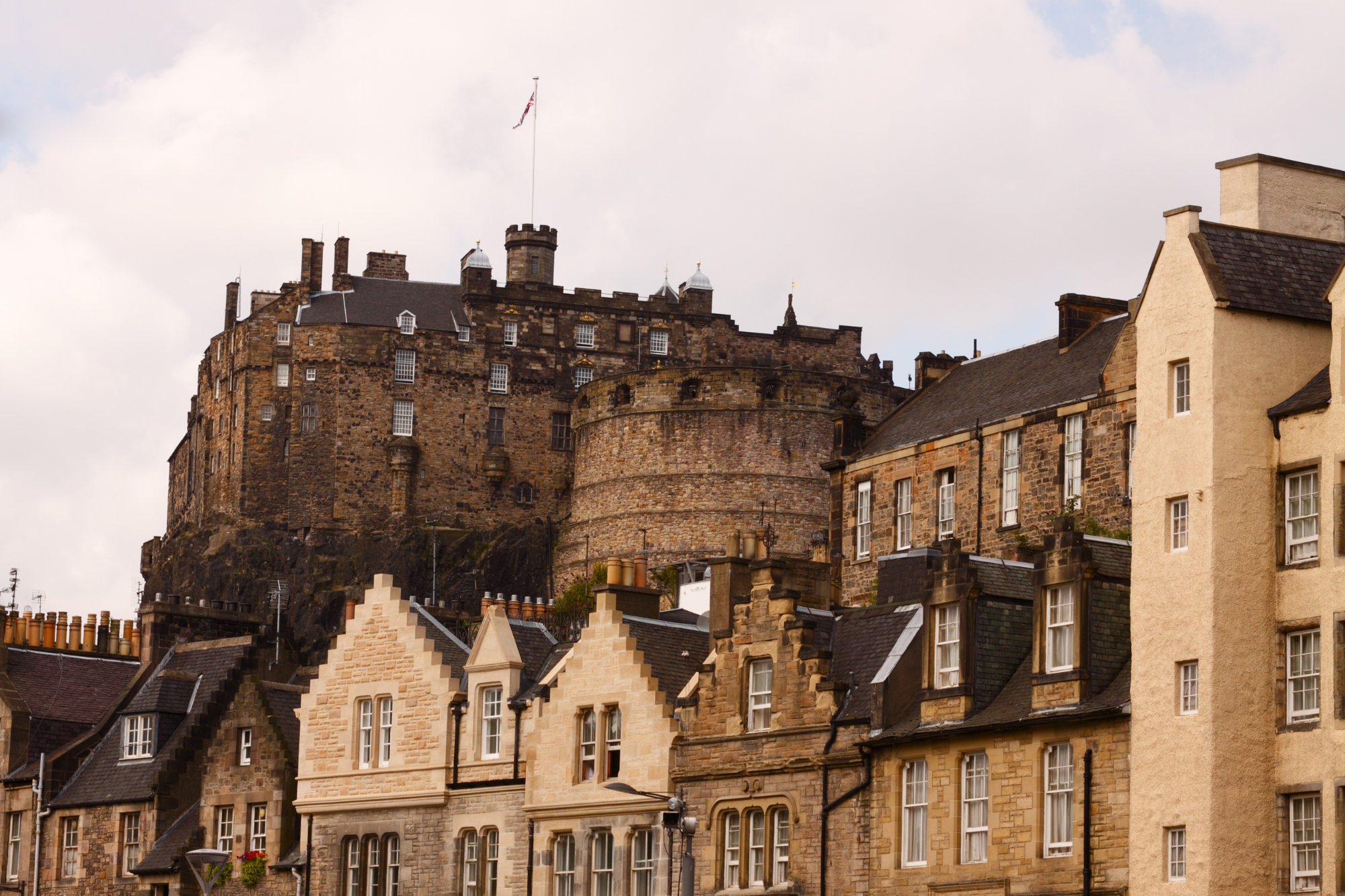
“The kirkyard is where I take people who want something nobody else has from Edinburgh. Late on an autumn afternoon, around an hour before sunset, the low light rakes across the headstones and the leaves go copper, and the Castle sits in silhouette above the wall. I work from a distance here and just let people settle into the place, because that quiet is what makes the portraits feel like film stills rather than tourist snaps.”
— Viktor, Localgrapher photographer in Edinburgh
Best Time of Year for Edinburgh Photo Spots
Getting the timing right matters more at Edinburgh photo spots than almost anywhere else in northern Europe, because the light at 55.95 degrees north behaves nothing like the light in Rome or Barcelona. Edinburgh’s photographic seasons divide cleanly into four distinct windows.
Light by Season at This Latitude
- May to August is the long-light season. Sunrise pushes back to between 4:30 and 5:30 AM, sunset reaches past 9 PM in mid-June (the “Simmer Dim” effect that you also see in the Shetlands), and blue hour holds for 35 to 45 minutes. This is the best season for the early-morning Vennel and Victoria Street empty-street frames, the Royal Botanic Garden lawn shots, and Arthur’s Seat sunrise sessions. Festival crowds peak in August, so book sessions either side of the Fringe or restrict yourself to dawn windows.
- September to October is the colour season. The Princes Street Gardens slope, the Royal Botanic Garden maple walk, and the kirkyard trees all turn coppery, and the light angle drops toward the gothic raking quality the Old Town stone responds best to. Crowds thin out after the third week of August, and the city becomes much more workable.
- November to February is the short, dramatic light season. Sunrise can be as late as 8:45 AM and sunset as early as 3:40 PM, which sounds restrictive but actually concentrates the entire shootable day into a single, three-hour golden window from 9 AM to noon. December cobblestone-and-festive-light frames on the Royal Mile are unbeatable, and the Castle in low winter light looks twice as gothic as it does in summer.
- March to April is the transition. Cherry blossom along the Chinese Hillside at the Royal Botanic, daffodils on the Princes Street Gardens slope, and rhododendrons at Dean Village all come in. Light is unpredictable, drizzle one hour and brilliant sun the next, which can be a gift for atmospheric frames. For the full picture on timing, outfits, and what to expect on the day itself, our Edinburgh photoshoot guide has everything you need before you book.

Couples photoshoot by Sofia, Localgrapher in Edinburgh
FAQ: Edinburgh Photo Spots
What are the best photo spots in Edinburgh?
Among all Edinburgh photography locations, the ones that deliver the most consistent professional results are The Vennel for the postcard Castle frame, Calton Hill for the city panorama at blue hour, Victoria Street for the painted-curve shot, the Salisbury Crags on Arthur’s Seat for the volcanic skyline, and Dean Village for the storybook valley frame. For something less-visited, the Inverleith House lawn at the Royal Botanic Garden and Circus Lane in Stockbridge are favourites among our local photographers.
What time of day is best for photographing Edinburgh?
Between 5:45 and 8 AM in summer, and 8 to 11 AM in winter. Edinburgh’s gothic stone needs directional, side-lit light to read its depth, and overhead midday light flattens everything. Blue hour (the 30 to 45 minutes after sunset) is the secondary window, especially from Calton Hill or Salisbury Crags.
How do I avoid crowds at the most popular Edinburgh photo spots?
Arrive before 9 AM. The Vennel, Victoria Street, and Dean Village fill up by 10 AM in any season, and the Royal Mile is busy from breakfast until late evening. Local photographers schedule sessions at 5:45 to 8 AM specifically to lock in empty-street frames before tour groups arrive.
Where can I get the classic Edinburgh Castle photo?
Three angles cover the canonical Castle shot. The Vennel for the postcard frame, Princes Street Gardens (Ross Fountain) for the foreground-fountain composition, and Calton Hill for the wide skyline panorama that includes the Castle, Old Town spine, and Arthur’s Seat in one frame.
Why is Edinburgh’s golden hour longer than in other European cities?
Latitude. At 55.95 degrees north, Edinburgh sits more than ten degrees further north than Rome and almost five degrees further north than Berlin, which makes the sun’s arc shallower and stretches both golden hour and blue hour significantly. In June, blue hour can hold for 45 minutes; in December, the sun barely clears the horizon and gives you raking light for most of the shootable day.
Edinburgh rewards photographers who know its rhythms. If you are still deciding where to take photos in Edinburgh, a 5:45 AM walk from the Vennel through Victoria Street, down Cockburn Street, and up to Calton Hill for blue hour gives you four of the city’s defining frames in a single morning, without crossing a single tour group. Add Dean Village or the Royal Botanic Garden for a second session, throw Arthur’s Seat in for the panorama, and you have a portfolio that captures the city the way locals see it rather than the way the postcards reduce it.
Every spot above comes from frames our Edinburgh photographers shoot week after week, with angles tested in drizzle, sunshine, dawn, and dusk, and refined over years of running sessions through the city. The locations are the easy part; what turns them into great photographs is timing, position, and the photographer who knows the difference. With the right hour and the right vantage, you stop chasing shots and start walking into them.